
Planning a Skjervoy aurora borealis evening
A Skjervoy aurora borealis visit belongs in the darker part of the year, with clear sky and an open view away from bright lights. The regional tourism guidance describes roughly mid-August to mid-April as a possible observation season and September to March as the preferred period. Those months describe when to look, while the conditions of an individual evening decide how much sky you can see.
Build the trip around being in the right place with enough time, rather than assuming an arrival night will deliver the display. An overnight base gives you a different rhythm from a daytime excursion arriving from Tromsø. Read about accommodation locations before deciding whether to stay in Skjervøy town or on another island.
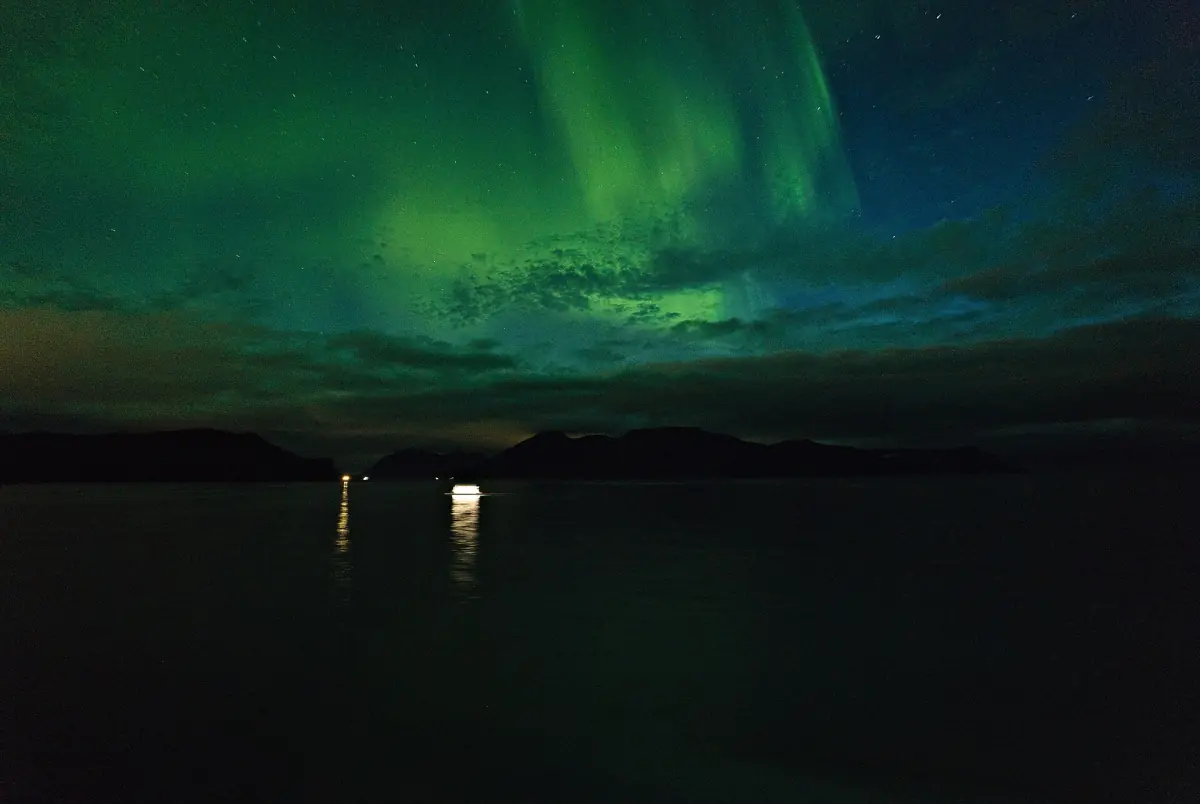
Polar night still has twilight
Winter brings polar night to the region, but it also brings daily twilight. Think of a short light window for daytime orientation and a longer dark part of the day for sky watching. The mountains and the visible horizon affect how the return of sunlight feels locally. Keep the plan flexible instead of assigning every activity to a single exact sunrise date.
For a trip combining sea and sky, separate the daytime whale programme from the evening. A whale boat's schedule concerns travel and marine observation; an aurora evening is its own activity. Our season guide helps balance winter wildlife, darkness and the very different light of summer.
Our pick: northern lights
A local guide, photography tips and a spotting scope support an evening observing the sky.
Hand-picked tours, booked through GetYourGuide. Prices are indicative starting prices in euros (as of October 2026). Tap a tour for live availability and the current price in your currency.
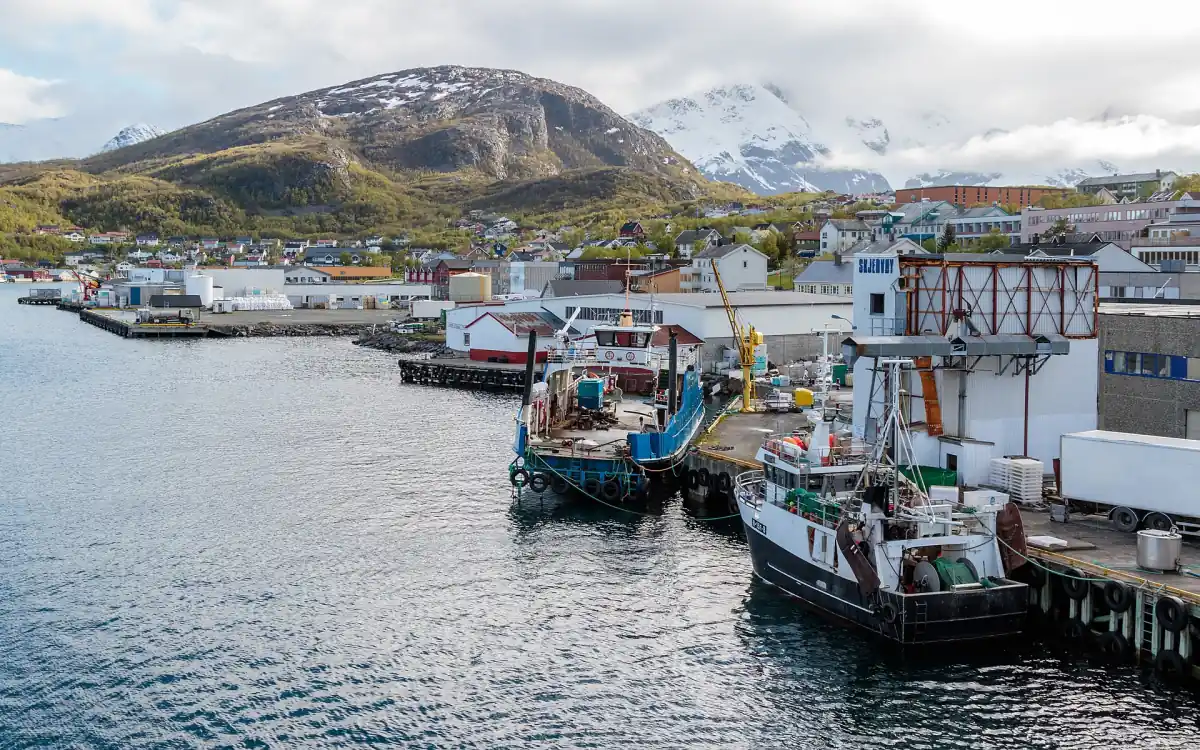
A local guided night-sky outing
A Skjervøy observation option includes a local guide, a hot drink, photography tips and a spotting scope, with the sky setting the conditions.
Engnes and Stussnesfjellet on Skjervøya
Engnes and Stussnesfjellet are named observation locations on Skjervøya in the regional tourism guidance. Their island location makes them different planning choices from a trip across to Arnøya. Familiarise yourself with the setting in daylight and consider the weather, footing and route before deciding where to spend an evening. A scenic viewpoint by day needs its own assessment after dark.
Engnes also has a walking route and coastal-fort remains, while Stussnesfjellet is described as a walking destination. Keep the historical and daytime walking interest separate from nighttime access. Snow, ice and darkness change the decision. Use the history and walking context to understand the places, then choose an evening location that suits the actual conditions and your transport arrangements.
Arnøya and Nordre Lauksund
The lighthouse at Nordre Lauksund near Tareneset on Arnøya is another named observation setting. Arnøya is a separate island in the municipality, rather than an extension of the town waterfront. An evening based there requires its own transport and accommodation decisions. Avoid making the sky-watching plan first and leaving the return journey until you are already outside in the dark.
If your base is on Skjervøya, weigh the extra island journey against spending the evening nearer your accommodation. The useful distinction is the location and access, not a ranking of which viewpoint will produce a display. The aurora remains a natural event, and clear skies matter wherever you choose to wait.
Night observation and stargazing
A dark location can offer time to look at the night sky as well as watch for aurora. Treat stargazing as an outdoor observation interest, with visibility dependent on cloud. Keep the evening manageable: a suitable location with a planned return can make more sense than a distant viewpoint chosen only for its name.
The local guided option lasts three hours and includes an experienced local guide, a hot drink, photography tips and a spotting scope. Meals and transport to the agreed meeting point are separate. Treat the photographic advice as part of the guided evening, rather than expecting a particular image, finished photo package or a guaranteed aurora display.
Warm clothing and the journey home
Prepare wool layers, warm socks, a hat, weatherproof gloves and spare clothing. Allow time for the return journey and avoid treating a headlamp as a complete winter-access plan. If your itinerary includes public transport, arrange the journey using the departure you actually intend to take. The arrival guide explains the separate travel stages, and the excursion overview keeps daytime outings distinct from evening observation.
Northern lights questions
Which months should I consider?
September to March is the preferred regional window. Plan for darkness and clear skies, with time for conditions to vary during your stay.
Does polar night mean complete darkness all day?
The region has daily twilight during polar night. Use that daylight transition for orientation and keep the night-sky activity separate.
Does the guided outing include dinner?
It includes a hot drink, local guidance, photography tips and a spotting scope. Plan meals and travel to the meeting point separately.